

On-page SEO in Ireland has become one of the most important factors for local companies trying to compete online. Yet many businesses still overlook it, focusing instead on backlinks or relying too heavily on basic optimisation.
For many local companies, SEO simply means adding a few keywords to a page or setting up a website and expecting results. In reality, on-page SEO is far more strategic. It determines how well search engines understand your services, your locations, and your relevance to potential customers.
If your website is not properly optimised, even the best services may remain invisible in search results.
This guide explains how on-page SEO works for local companies in Ireland, why many businesses struggle to get it right, and how you can build pages that rank consistently and generate real enquiries.
By the end of this article, you will understand exactly how to improve your website’s on-page SEO, implement advanced on-page optimisation techniques, and compete more effectively in local search results across Ireland.
Key Takeaways
- On-page SEO is the foundation of local search visibility
- Google prioritises relevance, structure, content quality, and user intent
- Service and location optimisation are essential for consistent rankings
- A well-optimised website drives more organic traffic than off-page tactics alone
- Strong on-page SEO leads to higher-quality enquiries, improved engagement, and better conversion rates
What On-Page SEO Means for Local Companies in Ireland
On-page SEO refers to the optimisation of individual web pages to improve their visibility in search engines such as Google. In the Irish market, this means aligning your website content with how people search for local services, including geographically targeted queries.
When businesses search for “on page seo ireland”, they are typically trying to understand how to improve keyword rankings, attract more local traffic, and increase enquiries through their website.
Effective on-page SEO focuses on three core goals:
- Ranking higher in search engine results pages (SERPs)
- Increasing local visibility across Irish cities and counties
- Converting website visitors into leads, calls, or customers
It involves multiple elements working together, including:
- Keyword optimisation
- Content relevance
- Page structure (HTML tags, headings)
- Internal linking
- User experience signals
Importantly, on-page SEO is not about keyword stuffing or over-optimisation. It is about semantic SEO — creating content that clearly communicates your services, intent, and authority while matching search intent.
Why Many Irish Businesses Struggle With On-Page SEO

Overlooking On-Page SEO Basics
One of the most common issues is failing to optimise the fundamentals of on-page SEO. Many websites have:
- Poorly written or missing title tags
- Weak or duplicated meta descriptions
- Incorrect heading hierarchy (multiple H1s or missing structure)
- No clear keyword targeting
Without these essential SEO elements, search engines cannot properly index or rank your pages.
Generic Website Content
A significant number of Irish business websites use thin or generic content that lacks depth and local relevance. These pages often:
- Do not include Irish-specific search terms
- Use duplicate content across multiple pages
- Fail to address user intent
- Lack topical authority
This results in low rankings and poor organic performance.
Competing With Better-Optimised Websites
In competitive industries, businesses that invest in on-page SEO services and content optimisation dominate search results. Their advantage comes from:
- Strong topical coverage
- Well-structured content
- Proper keyword mapping
- Advanced internal linking strategies
Without similar optimisation, smaller or newer businesses struggle to compete.
How On-Page SEO Actually Works in Ireland
How Google Reads Your Pages
Search engines use crawlers and algorithms to analyse your website content. They evaluate:
- Title tags and meta data
- Heading structure (H1, H2, H3)
- Keyword placement and frequency
- Content relevance and depth
These signals help Google determine whether your page is relevant for queries such as “on page seo ireland” or other local search terms.
Role of Content in Rankings
Content is the backbone of on-page SEO. High-quality content should:
- Answer user queries clearly
- Match search intent (informational, commercial, transactional)
- Provide value beyond competitors
Google increasingly uses Natural Language Processing (NLP) to understand context, meaning, and relationships between words. This means your content must be comprehensive, natural, and semantically rich.
How Google Understands Local Relevance
For Irish businesses, local relevance is a key ranking factor. Google evaluates:
- Location-based keywords (e.g. Dublin, Cork, Galway)
- Contextual mentions of service areas
- Localised content signals
- User engagement metrics (bounce rate, dwell time)
The stronger your local signals, the more likely your pages will rank for local searches.
Key On-Page SEO Signals in Ireland
Important ranking signals include:
- Primary and secondary keyword placement
- Content depth and topical authority
- Internal linking structure
- Page experience (readability, layout)
- Local SEO relevance
Together, these create a strong on-page SEO foundation.
Step-by-Step On-Page SEO Strategy for Local Companies
Step 1: Keyword Research for Ireland

Effective keyword research is the starting point of any SEO strategy. Your primary keyword should be “on page seo ireland”, supported by LSI and semantic keywords such as:
- Local SEO Ireland
- SEO services Ireland
- Website optimisation Ireland
- On-site SEO techniques
- Technical SEO basics
- SEO for small businesses Ireland
- Local search optimisation
Focus on long-tail keywords that reflect user intent and have lower competition.
Step 2: Optimise Page Titles and Meta Descriptions
Title tags are one of the most important ranking factors. Best practices include:
- Including the primary keyword near the beginning
- Keeping titles clear and compelling
- Staying within character limits
Meta descriptions should:
- Encourage click-through rates (CTR)
- Include relevant keywords naturally
- Summarise the page effectively
Step 3: Create High-Quality Service Pages
Each service should have a dedicated landing page optimised for specific keywords. These pages should include:
- Detailed service descriptions
- Benefits and outcomes
- Frequently asked questions
- Clear calls to action
Use semantic keywords and related terms to improve topical relevance and keyword coverage.
Step 4: Optimise Content for Local Intent
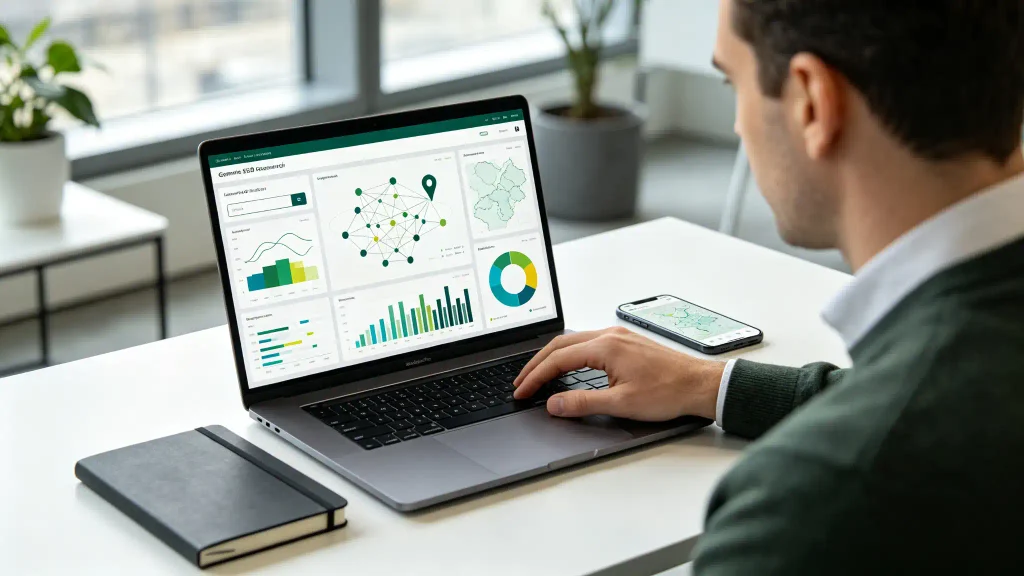
To rank in Ireland, your content must reflect local search behaviour. This includes:
- Using Irish spelling and terminology
- Mentioning relevant locations naturally
- Including local examples, case studies, or references
Avoid duplicate content across location pages instead, create unique, valuable content.
Step 5: Improve Internal Linking
Internal linking is a powerful yet often overlooked SEO tactic. It helps:
- Distribute link equity across your site
- Improve crawlability and indexing
- Guide users to important pages
Use descriptive anchor text and link relevant pages together to strengthen your site structure.
Real-World Example: On-Page SEO in Action
The Problem
A local company had a poorly optimised website with:
- Thin content
- No keyword targeting
- Weak page structure
As a result, it struggled to rank for competitive keywords.
Changes Made
The website was improved by implementing:
- Keyword-optimised titles and headings
- Content expansion with semantic keywords
- Better internal linking
- Clear service page structure
The Results
Within a few months:
- Rankings improved for multiple keywords
- Organic traffic increased significantly
- User engagement improved
- Conversion rates increased
This highlights how effective on-page SEO can transform performance.
What Drives On-Page SEO Results
| Factor | Impact |
| Optimised titles and headings | Very high |
| Content quality and depth | Very high |
| Keyword placement | High |
| Internal linking | High |
| Meta descriptions | Medium |
Key insight: Websites with strong semantic SEO and well-optimised content consistently outperform competitors.

On-Page SEO in Ireland – FAQs
Is on-page SEO enough for local rankings?
On-page SEO is essential, but it works best when combined with off-page SEO, backlinks, and Google Business Profile optimisation.
How long does it take to see results?
Typically, it takes between 3 to 6 months to see measurable improvements, depending on competition and website authority.
How many keywords should be used?
Focus on one primary keyword and several supporting LSI keywords. Avoid keyword stuffing and prioritise natural language.
Is duplicate content a problem?
Yes. Duplicate content can harm rankings and reduce search engine trust.
How much does on-page SEO cost in Ireland?
Costs vary depending on the scope, but it remains one of the highest ROI digital marketing strategies.
Final Thoughts and Next Steps
On-page SEO is the foundation of successful search engine optimisation. Without it, even the most advanced strategies will struggle to deliver results.
For local companies in Ireland, success depends on:
- Creating high-quality, optimised content
- Structuring pages effectively
- Targeting local search intent
Modern SEO is no longer just about keywords — it is about context, relevance, and user experience.
If you want to improve your rankings, increase organic traffic, and generate more enquiries, your website must be fully optimised.
Ready to Improve Your On-Page SEO?
If you are serious about improving your visibility, investing in on-page SEO is the logical next step.
Whether you need:
- Fully optimised service pages
- A complete SEO audit
- A long-term content strategy
A strong on-page SEO foundation will drive sustainable growth and consistent results.